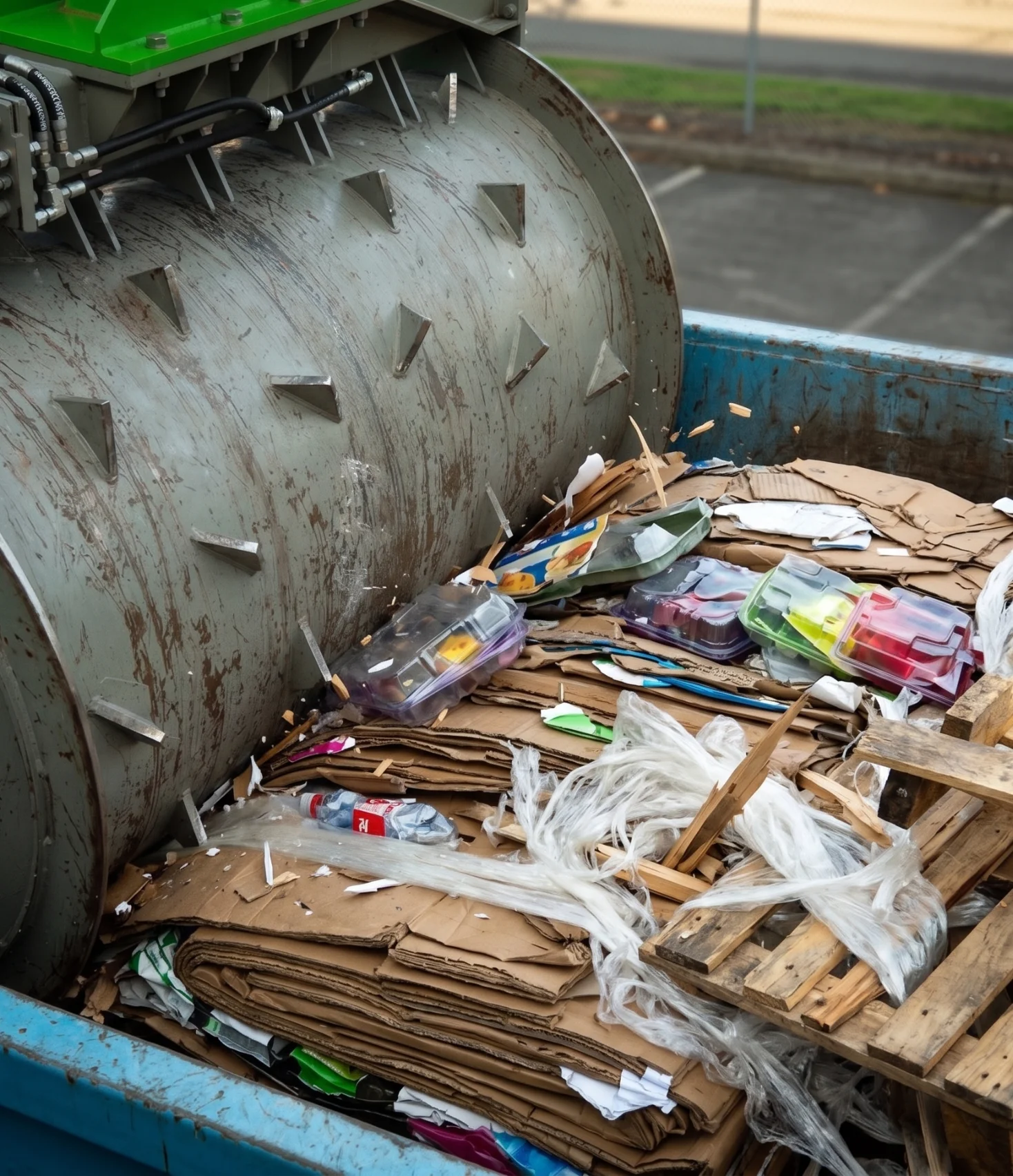
Quick Answer: Volume reduction at the source is the unglamorous but vital mechanical engine of the circular economy. By violently crushing massive volumes of loose industrial waste, like cardboard, plastics, and pallets, into highly dense, maximum-tonnage loads, facilities drastically cut transportation emissions and make downstream recycling economically viable. Mobile roller compactors transform low-density liability into heavy, transportable assets. Without aggressive upstream compaction, recycling centers are overwhelmed by empty air, haulers burn massive amounts of diesel for minimal payload, and the circular supply chain collapses under its own logistical inefficiency.
The Logistical Bottleneck of the Circular Economy
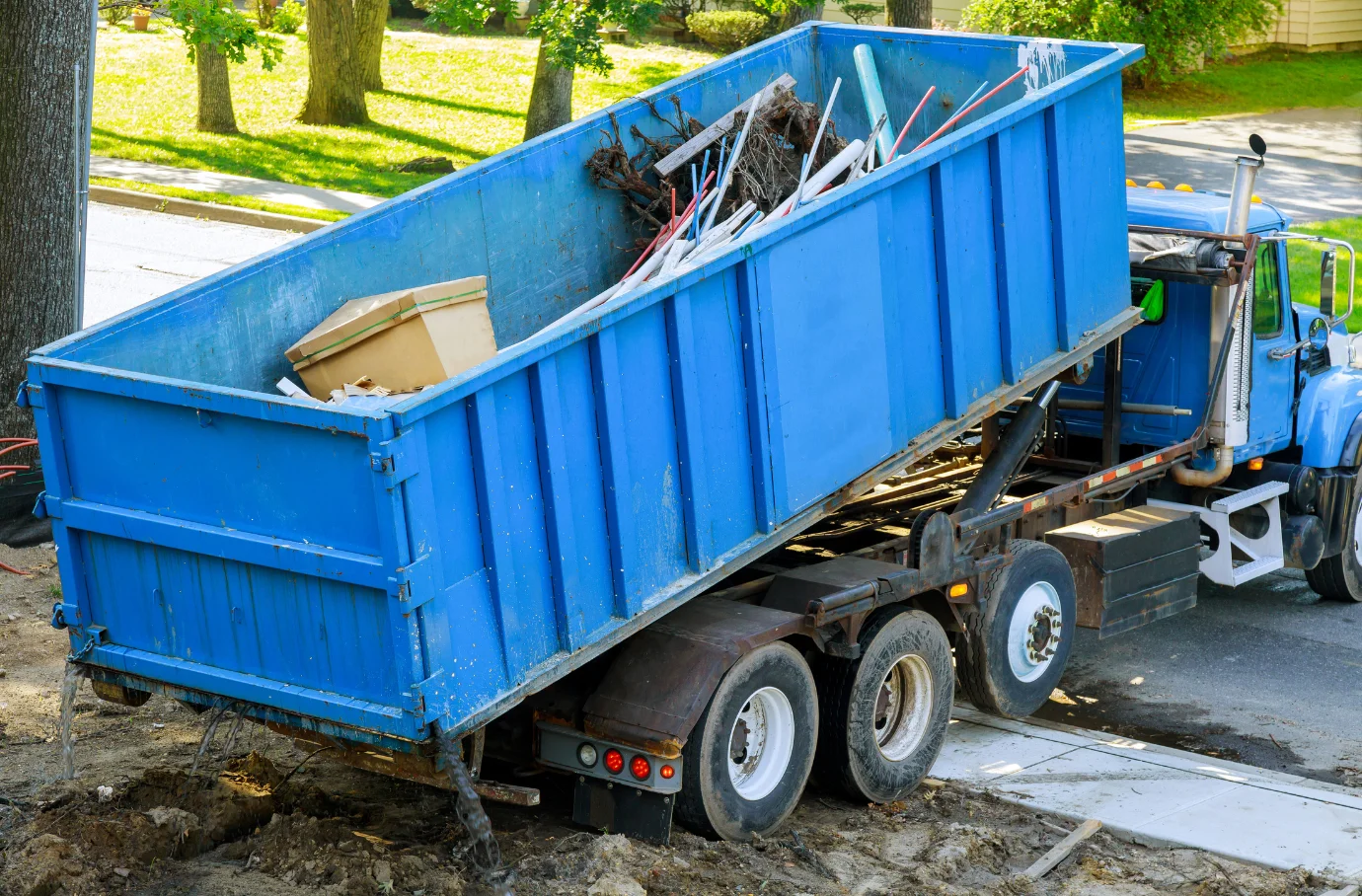
Corporate sustainability reports frequently romanticize the circular economy, the concept of perfectly recycling materials back into the manufacturing stream to eliminate waste. However, the physical reality of moving waste from a factory floor to a recycling processor is brutally complex and expensive. The primary enemy of industrial recycling is not the material itself; it is empty air. Items like corrugated cardboard, rigid plastics, and wooden pallets are inherently bulky. When discarded into open-top dumpsters, they create a low-density mass. You end up with a massive 40-yard dumpster that holds only two tons of recyclable material.
This lack of density destroys the financial viability of recycling. Waste haulers charge based on the trip, not just the tonnage. If a truck burns 30 gallons of diesel to transport a dumpster filled mostly with air, the carbon emissions generated by the transport often negate the environmental benefits of recycling the material. Furthermore, the recycling processor receives a trickle of material that requires extensive handling and staging before it can be fed into their high-capacity pulpers or extruders. The entire supply chain chokes on the inefficiency of moving uncompacted volume.
By implementing heavy-duty mobile compaction at the point of origin, industrial facilities fundamentally correct this broken logistical chain. A roller compactor crushes the structural voids out of the waste, pressing cardboard flat, splintering wood, and tangling plastics into a dense mat. A single dumpster can now hold up to five times the weight of material. This instant density transformation means the truck that arrives is hauling a maximized payload. The carbon footprint per ton of recycled material plummets, and the economic margins for both the facility and the recycler expand significantly.
Driving Down Supply Chain Carbon Emissions
Achieving ambitious corporate green goals, such as net-zero emissions, requires aggressive auditing of Scope 3 emissions, the indirect emissions that occur in a company's value chain. Waste transportation is a massive contributor to these figures. Heavy-duty diesel roll-off trucks average single-digit miles per gallon. Having these trucks visit your facility daily to haul away uncompacted, low-density waste is a catastrophic leak in your carbon accounting. You are actively funding the burning of fossil fuels to transport the empty space between your garbage.
Aggressive volume reduction is a direct assault on these transport emissions. The math is undeniable. If your manufacturing plant generates enough bulky plastic and cardboard to require five hauls a week, you are responsible for the diesel emissions of five heavy truck round-trips. By deploying a mobile roller compactor to crush the waste inside the bins, you increase the dumpster density by up to 80%. Those five weekly hauls are suddenly reduced to just one. You have instantaneously eliminated up to 80% of the trucking emissions associated with your waste disposal operations.
This is not a theoretical sustainability metric; it is a hard, measurable reduction that facility managers can immediately report to corporate stakeholders. Furthermore, reducing the frequency of heavy truck traffic in your yard lowers the localized air pollution (particulates and NOx) and noise levels around your facility, directly improving conditions for your ground workforce and neighboring communities. Compaction proves that true environmental stewardship in the industrial sector is achieved through heavy mechanical efficiency, not just good intentions.
Empowering the Economics of Recycling Facilities
For the circular economy to function, the entities processing the waste must be profitable. Material Recovery Facilities (MRFs) and specialized recyclers operate on tight margins based on tonnage throughput. When they receive loose, uncompacted loads, their staging areas back up. Their loaders spend hours pushing light, fluffy materials around the yard trying to feed their stationary balers. The inefficiency at the processor level increases their operating costs, which they ultimately pass back to you in the form of lower rebates for your recyclable materials or higher tipping fees.
When you utilize a mobile compactor to deliver highly dense, heavy dumpsters of pre-crushed material, you become a premium partner to the recycling facility. A heavily compacted load of cardboard or pallets is far easier for the MRF to manage. Because the structural memory of the material has already been destroyed by the roller compactor's multi-ton steel drum, the material requires less handling at the processor. It feeds more smoothly into their shredders and industrial balers. By optimizing the material before it leaves your yard, you streamline their operation.
This upstream optimization gives logistics managers immense leverage when negotiating hauling and recycling contracts. Processors are often willing to offer better rates or higher rebates for densely packed, heavy dumpsters because it maximizes the efficiency of their own equipment. Mobile compaction ensures that your waste is no longer viewed as a logistical burden, but rather as a highly optimized, transport-ready commodity. This mechanical discipline is what truly closes the loop in the circular economy, making large-scale recycling both physically possible and highly profitable.
Conclusion
The circular economy fails the moment it costs more energy to transport waste than it saves to recycle it. Empty space in your open-top dumpsters is the enemy of sustainability. Relying on waste haulers to transport loose, low-density materials across the country burns massive amounts of diesel and destroys the economic viability of recycling. By adopting heavy-duty mobile compaction, you actively take control of your supply chain’s physical efficiency, aggressively crushing the void space out of your waste directly at the source.
Packmat’s mobile roller compactors provide the brute mechanical force necessary to make green initiatives actually work on the ground. You will drastically slash your Scope 3 transportation emissions, reduce your hauling frequencies, and turn your sprawling waste output into dense, highly valuable commodities. Integrating violent volume reduction into your daily operations is the only way to transform theoretical corporate sustainability goals into hard, profitable, and measurable industrial reality.
Industry References & Data
- Environmental Protection Agency (EPA): Champions Sustainable Materials Management (SMM), explicitly noting that transport efficiency and source reduction are critical components of minimizing the carbon lifecycle of industrial waste.
- Department of Transportation (DOT): Encourages the maximization of commercial vehicle payloads to reduce total highway trips, thereby decreasing infrastructure wear and aggregate vehicular emissions.
- Occupational Safety and Health Administration (OSHA): Regulates the safe handling and dense storage of recyclable materials to prevent fire hazards and physical obstruction in industrial settings.
Frequently Asked Questions
Q: Does compacting mixed recyclables make them harder for the recycling facility to sort?
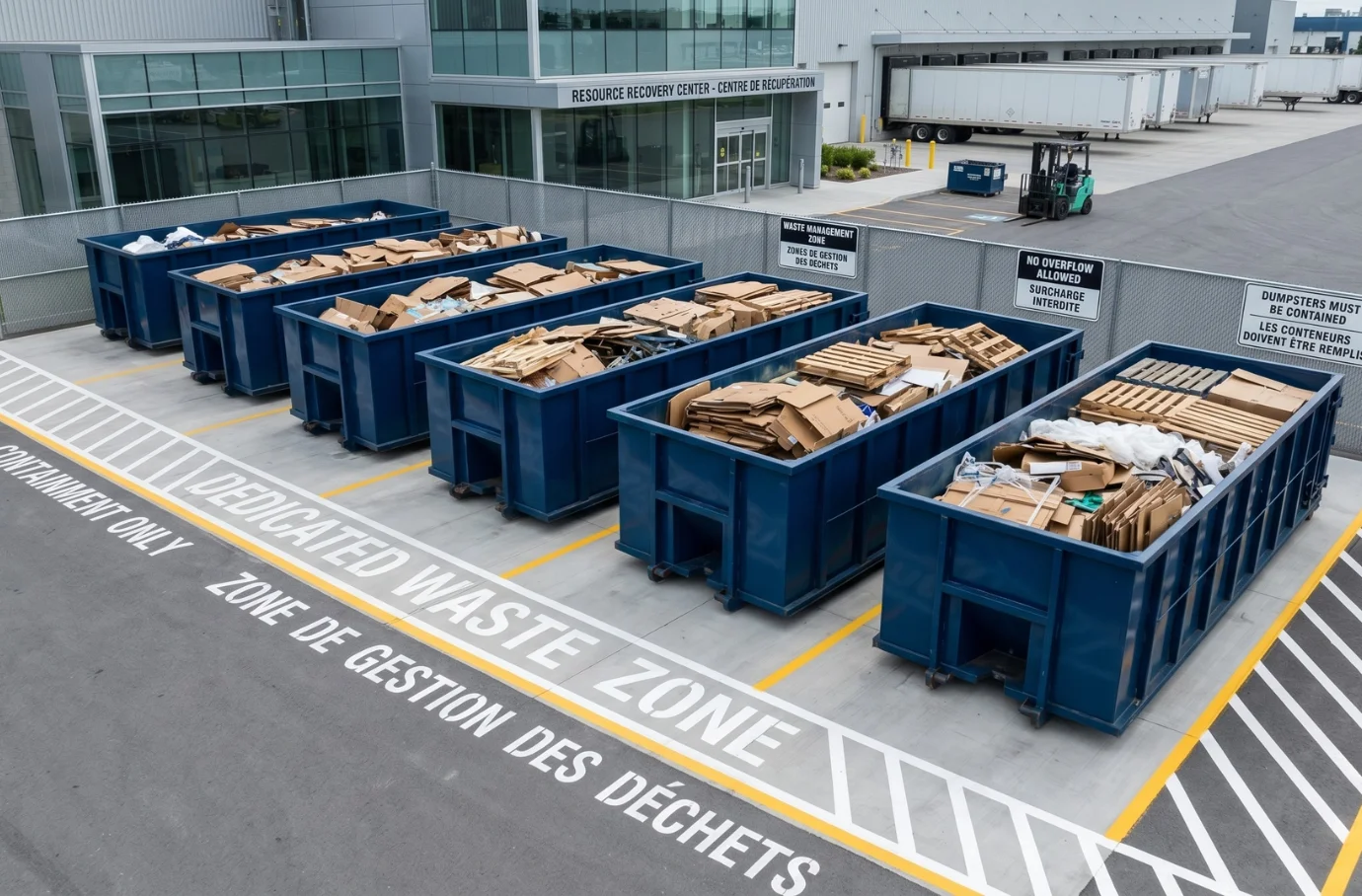
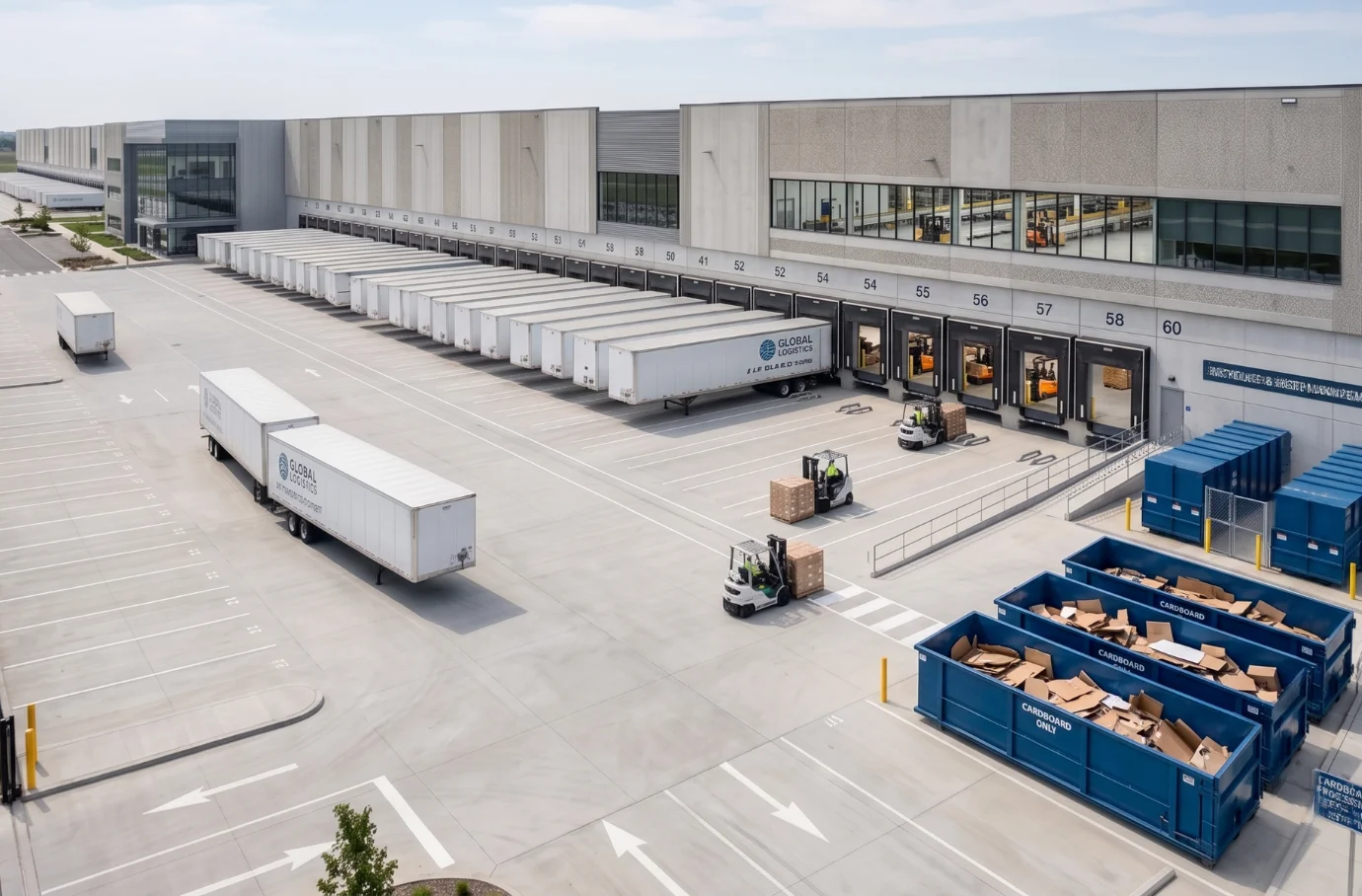
A: If you are running a single-stream recycling program where cardboard, plastics, and metals are all thrown into the same open-top bin, aggressive compaction can tangle the materials together. While modern Material Recovery Facilities (MRFs) have advanced mechanical separation technology, heavily crushed mixed waste can slow their sorting lines. However, most high-volume industrial facilities source-separate their waste (e.g., a dedicated bin for cardboard, another for wood). Compacting source-separated materials is highly beneficial, as the MRF receives a pure, dense load that requires zero sorting, maximizing efficiency for both parties.
Q: How exactly does compaction reduce our company's Scope 3 emissions?
A: Scope 3 emissions include the carbon footprint generated by third-party logistics and hauling partners moving your goods and waste. A standard heavy-duty diesel roll-off truck emits roughly 22 pounds of CO2 per gallon of fuel consumed. If a truck visits your facility 100 times a year to haul uncompacted waste, that is a massive carbon debt. By compacting the waste and increasing the density by 4x to 5x, you reduce those visits to 20 or 25 per year. You physically eliminate 75% of the fuel burned on your behalf, resulting in a massive, mathematically provable drop in your reported Scope 3 emissions.
Q: Can we claim ROI on a compactor purely through sustainability metrics?
A: While the sustainability metrics are incredibly strong, you do not need to rely on them alone to prove ROI. The financial return of a mobile compactor is driven by hard, immediate operational cash savings. The massive reduction in hauling fees, the elimination of manual labor used to break down boxes or pallets, and the reclaimed operational space in the yard all contribute to a rapid payback period. The fact that this aggressive cost-cutting machine simultaneously allows you to hit your corporate net-zero targets and improve your environmental compliance is simply the ultimate operational bonus.
Easy steps to create a color palette
Lorem ipsum dolor sit amet, consectetur adipiscing elit lobortis arcu enim urna adipiscing praesent velit viverra sit semper lorem eu cursus vel hendrerit elementum morbi curabitur etiam nibh justo, lorem aliquet donec sed sit mi dignissim at ante massa mattis.
- Neque sodales ut etiam sit amet nisl purus non tellus orci ac auctor
- Adipiscing elit ut aliquam purus sit amet viverra suspendisse potent
- Mauris commodo quis imperdiet massa tincidunt nunc pulvinar
- Excepteur sint occaecat cupidatat non proident sunt in culpa qui officia
What is a color palette?
Vitae congue eu consequat ac felis placerat vestibulum lectus mauris ultrices cursus sit amet dictum sit amet justo donec enim diam porttitor lacus luctus accumsan tortor posuere praesent tristique magna sit amet purus gravida quis blandit turpis.
Don’t overspend on growth marketing without good retention rates
At risus viverra adipiscing at in tellus integer feugiat nisl pretium fusce id velit ut tortor sagittis orci a scelerisque purus semper eget at lectus urna duis convallis porta nibh venenatis cras sed felis eget neque laoreet suspendisse interdum consectetur libero id faucibus nisl donec pretium vulputate sapien nec sagittis aliquam nunc lobortis mattis aliquam faucibus purus in.
- Neque sodales ut etiam sit amet nisl purus non tellus orci ac auctor
- Adipiscing elit ut aliquam purus sit amet viverra suspendisse potenti
- Mauris commodo quis imperdiet massa tincidunt nunc pulvinar
- Adipiscing elit ut aliquam purus sit amet viverra suspendisse potenti
What’s the ideal customer retention rate?
Nisi quis eleifend quam adipiscing vitae aliquet bibendum enim facilisis gravida neque euismod in pellentesque massa placerat volutpat lacus laoreet non curabitur gravida odio aenean sed adipiscing diam donec adipiscing tristique risus amet est placerat in egestas erat.
“Lorem ipsum dolor sit amet consectetur adipiscing elit, sed do eiusmod tempor incididunt ut labore et dolore magna aliqua enim ad minim veniam.”
Next steps to increase your customer retention
Eget lorem dolor sed viverra ipsum nunc aliquet bibendum felis donec et odio pellentesque diam volutpat commodo sed egestas aliquam sem fringilla ut morbi tincidunt augue interdum velit euismod eu tincidunt tortor aliquam nulla facilisi aenean sed adipiscing diam donec adipiscing ut lectus arcu bibendum at varius vel pharetra nibh venenatis cras sed felis eget.

Antoine Galdès
For over 10 years, I’ve worked in marketing with a strong focus on cleantech innovation and the evolving challenges shaping the waste and compaction industry. I’m passionate about staying ahead of industry trends, continuously learning, and sharing practical insights that help businesses and municipalities improve their operations more efficiently and sustainably.
.webp)
